Sewing may be an incredibly frustrating and intimidating hobby to begin, but have absolutely no fear! Many of the cosplayers and seamstresses you admire have all started from the same point at which you, yourself, stand! (´꒳`) For this long overdue post, I am bringing to you my essential top 10 tips to begin your very own climb up the treacherous Mount Stitch and Serge!
Writing this post has been a bit procrastinated on simply because I am not nearly as qualified as so many of my other wonderful and talented friends! But, I do hope that this post can give you some insight into some common beginner issues and mentalities that you should be aware of! (▰∀◕)ノ

2. Find your niche, but do not yourself into a hole!
What I'm trying to say here, is find what type of things you enjoy making by learning how to make a lot of things. Then, continue to be open to trying new designs! Within sewing, there are so many different things you can do in order to create your end goal. Sewing - when you are not in the professional industry - is not about absolute perfection, it's often about an end goal.
Personally, I really enjoy detailing in my projects, so small extra tidbits make me happier than completing some garment or costume exactly as it is portrayed in the reference. Adding a trim, fun buttons, and making detailed accessories are really where I enjoy my sewing the most! But that also does not mean that I won't enjoy sewing a pleated skirt or a vest, too! I just... don't particularly like hand ruffling anymore... (ᇴ‿ฺᇴ)
3. Make what you love, and love what you make!
Another less technical tip is to find love in your end product. The thing about making something is that even if it is not perfect, it's handmade and you had a journey to make it! When you look at the end product, think of what you learned and how you progressed just by sewing that one item. You will be amazed by how much you learn by using new techniques on a pattern you've used 800 times! If you can only see flaws in your work, maybe it's time to step away and think about if you could have changed your process to enjoy both the end product and the sewing more... And if not - maybe sewing is not the thing for you. (But don't worry! I know you are super talented in other things!)
4. Know Your Machine!
Your sewing machine is all the climbing gear you need to beat the treacherous Mount Stitch and Serge! Knowing what parts of your machine control what (and how to thread your machine!) is really essential to getting a lot less frustrated in the end. There are some things that I don't understand about my sewing machine - I have a brother CS6000i - that probably are causing me issues still...! (*・艸・)
When it comes to buying a machine, a simple $100 machine will get you started! It's easier to just buy a new machine, sometimes, than get it tuned every 6 months like you must with a more expensive machine. This is especially true if you are just a beginner or a casual seamstress. Brother machines are made super sturdily and you can find them on Amazon, in sewing stores, and in Walmart! If you have trouble with your machine, look up YouTube videos on the machine you have - or you are planning to get - to get acquainted with it! And don't be afraid to look at the manual that comes with it!
5. Tension Tension Tension!
When you are sewing, especially with fabrics that are not cotton broadcloth or cotton, you will run into issues with your thread tension. The tension of your thread is how the top and bottom bobbin thread come together on the fabric to stitch it together. It controls how taught your machine keeps your thread as it feeds it through the needle, too. (At least that's my non-technical explanation of it!)
You should adjust your tension based on your fabrics and based on how your thread is acting. Both sides of your garment should have stitches that lay completely flat and are stitching the same length all the way through. If there are issues with the tension, it will definitely show on the seam and may cause more frustration... So my little cheat sheet helps me decide if my tension needs to be adjusted higher (on my machine the standard is 4, so anything above is a higher tension, and anything lower is a lower tension!)

6. Fabric?! What about it?!
Fabric is something you're going to struggle with in many different ways. When you sew, different fabrics act a different way and need different care. Here is a short list of my various tips and problems I encounter!
7. Needles!!!!
One thing I learned while sewing my Yayoi cosplay for Katsucon was that different needles serve different purposes that can be SO HELPFUL! A one year old universal needle in your sewing machine will ... perform badly. Change your universal needle when it seems to get dull and don't be afraid to buy a different needle for a different fabric or project. There are denim needles, microtex needles (for delicate fabrics), stretch needles, and SO many more!
Here is a great guide by Joann's on machine needles! Click Me!
8. Patterns and Draping - What's the Difference and Where do I Start?
Something that I have ALWAYS been irritated by is patterning. I can look at something and see what shape I should cut in, but there are hidden seams and weird shapes when it comes to creating cosplay and idol designs that are just frustrating. Some of the "easiest" parts of a costume are often some of the hardest to pattern! I think that I should cover this in another post in the future, too.
Pattern sizes are actually bigger than in-store dress sizes. That is due to in-store dress sizes being inconsistent and coming from an industry with little common standard in Women's sizing. There's a whole Buzzfeed video on sizing, actually, but when it comes to pattern you need to be ready to take your patterns in after you do a mock up. Mocking up a pattern is so important, especially when you start a new type of garment you have never tried to do before. Once your mock up fits, then you can use that as the pattern for your official garment!
Don't be afraid to sit and alter a pattern, either! Some patterns work for specific parts of the garment, but may need to be changed for shape or wearing purposes. This is really where knowing how clothing is created, how seams work, and how patterns mesh together really helps. The more you use patterns, the better you will understand this which is why I definitely say start with easy projects! Now, there are SO MANY Cosplay patterns out there from commercial pattern brands to indie brands like Cut/Sew.
Draping is a different kind of monster, though, that really isn't smart to attempt unless you are really familiar with where seams go and how to create something to your body shape. Draping is the term for creating your own pattern based off of how it lays on a dress form. When you understand the various different parts that go into a pattern - such as seams, pleats, etc. - draping will be an attractive idea for harder projects that do not match with a easily accessible pattern. Draping requires a lot of know about your body, sewing, patterns, and a lot of patience and time!
TLDR: Try using commercial patterns and try to look up various guides on the important parts of patterns and what they mean. Patterns are key to a well-fitted garment, even if you have to do a mock up each time and take it in to your body. Dress forms are awesome - so shout out to them. (๑→ܫ←)
9. Finishing Your Garment
A lot of the time, you think "Nobody is going to see the inside so it won't matter!" but for some things, that's the wrong way to look at it! There are so many ways to finish the inside of your garment so that it doesn't shred itself apart. (Especially if you are using sheer fabrics that will easily fray!)
10. Reference Photos vs. Reality vs. Artistry
When you are making a costume, it is important to stay true to the art where you can but there are certain occasions where I think it is okay to stray from that! d(・∀・○) When reality sets in and a design is almost physically impossible you will need to step away from the design and consider what works for your body and for moving around at a con or during photoshoots.
Next, is when you are putting your own subtle twists on the design through fabric choice and small details that you think will suit the overall aesthetic! Of course you do not want to get too crazy with fabric when it comes to, say, a school uniform - but you can add your own twist on things to breath new life into a costume that may be worn by 23048 other people at the convention!
When is it NOT okay to alter a design? When you commission a design! If you paid someone to design a costume or outfit for you, and you are going to sew it based off of the design or commission it from someone altogether - do NOT alter it! (Unless, that is, the person designing has given you the okay!) If you run into trouble with the basic pattern, that can probably be altered to suit how your body works and how life is actually. Adding a seam here or there to make sure you can move and it won't rip isn't too much of an issue. But changing a large part of the design is really rude and you should definitely ask the artist if you are not satisfied with the design you paid for.

 |
| This is a picture of me and Lee A.M. Photography at the recent DZD Photoshoot! |
Writing this post has been a bit procrastinated on simply because I am not nearly as qualified as so many of my other wonderful and talented friends! But, I do hope that this post can give you some insight into some common beginner issues and mentalities that you should be aware of! (▰∀◕)ノ
Let's begin!
1. If you do not enjoy sewing - do not waste your time and money!
This is my BIGGEST TIP. There is a lot of pressure to try and force yourself into a popular niche that you may not even enjoy... With how the state of costuming is, it has become so much easier to buy cosplays or commission them from your favorite makers! If you are trying to force yourself to sew and just find that you end up with a headache or in tears each time you sew, it is not worth the grief... You will just be wasting your time you could be doing something else you enjoy.
There are so many creative outlets that if you are a crafty person and sewing is not for you, than you have other outlets to try. Attempt watercolor painting, knitting, cross stitching, sketching, coloring by number, prop making, dealing with wigs, digital art, make up artistry, photography, game-making, figure making, graphic design... There are so many things to try, that I am positive you will find something that helps you feel happy! You can even turn your craft into something that serves you nerdily too!! (人◕ω◕) Cosplaying/J-Fashion creation isn't the only nerdy hobby, despite it's widespread nature!
What I'm trying to say here, is find what type of things you enjoy making by learning how to make a lot of things. Then, continue to be open to trying new designs! Within sewing, there are so many different things you can do in order to create your end goal. Sewing - when you are not in the professional industry - is not about absolute perfection, it's often about an end goal.
Personally, I really enjoy detailing in my projects, so small extra tidbits make me happier than completing some garment or costume exactly as it is portrayed in the reference. Adding a trim, fun buttons, and making detailed accessories are really where I enjoy my sewing the most! But that also does not mean that I won't enjoy sewing a pleated skirt or a vest, too! I just... don't particularly like hand ruffling anymore... (ᇴ‿ฺᇴ)
3. Make what you love, and love what you make!
Another less technical tip is to find love in your end product. The thing about making something is that even if it is not perfect, it's handmade and you had a journey to make it! When you look at the end product, think of what you learned and how you progressed just by sewing that one item. You will be amazed by how much you learn by using new techniques on a pattern you've used 800 times! If you can only see flaws in your work, maybe it's time to step away and think about if you could have changed your process to enjoy both the end product and the sewing more... And if not - maybe sewing is not the thing for you. (But don't worry! I know you are super talented in other things!)
Let's get ~technical~!
4. Know Your Machine!
 |
| This is my favorite sewing diagram EVER. |
Your sewing machine is all the climbing gear you need to beat the treacherous Mount Stitch and Serge! Knowing what parts of your machine control what (and how to thread your machine!) is really essential to getting a lot less frustrated in the end. There are some things that I don't understand about my sewing machine - I have a brother CS6000i - that probably are causing me issues still...! (*・艸・)
When it comes to buying a machine, a simple $100 machine will get you started! It's easier to just buy a new machine, sometimes, than get it tuned every 6 months like you must with a more expensive machine. This is especially true if you are just a beginner or a casual seamstress. Brother machines are made super sturdily and you can find them on Amazon, in sewing stores, and in Walmart! If you have trouble with your machine, look up YouTube videos on the machine you have - or you are planning to get - to get acquainted with it! And don't be afraid to look at the manual that comes with it!
5. Tension Tension Tension!
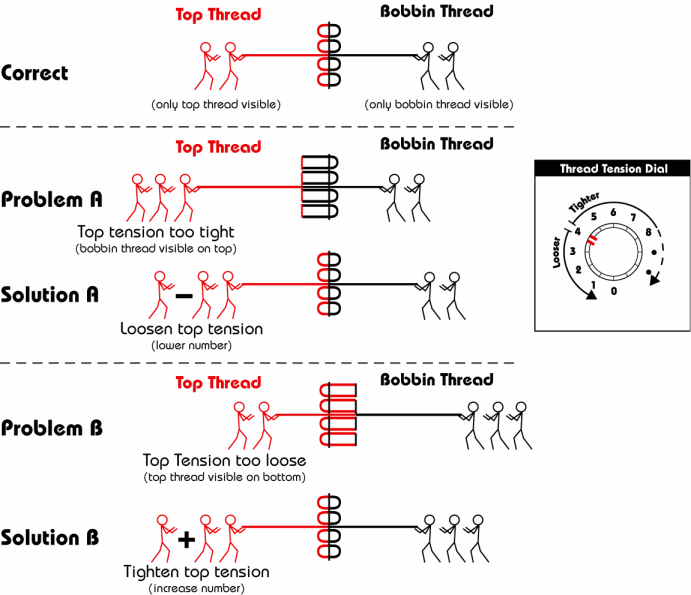
When you are sewing, especially with fabrics that are not cotton broadcloth or cotton, you will run into issues with your thread tension. The tension of your thread is how the top and bottom bobbin thread come together on the fabric to stitch it together. It controls how taught your machine keeps your thread as it feeds it through the needle, too. (At least that's my non-technical explanation of it!)
You should adjust your tension based on your fabrics and based on how your thread is acting. Both sides of your garment should have stitches that lay completely flat and are stitching the same length all the way through. If there are issues with the tension, it will definitely show on the seam and may cause more frustration... So my little cheat sheet helps me decide if my tension needs to be adjusted higher (on my machine the standard is 4, so anything above is a higher tension, and anything lower is a lower tension!)
6. Fabric?! What about it?!
Fabric is something you're going to struggle with in many different ways. When you sew, different fabrics act a different way and need different care. Here is a short list of my various tips and problems I encounter!
- Print on One Side: When cutting out your fabric, be careful of how your pattern lays on a printed fabric. If you are not careful and thoughtful, you may cut out the print on the back side of pattern or upside down.
- Fabric Choices: Some fabrics, while beautiful, may not lay or sew like you plan. Cotton will not show up as fantastically as a sateen or suiting may in a photo or in weight... There is a lot to say on this one! (I do plan on doing another post on this!)
- Slip and Slide!: Satin fabrics and sheer fabrics will slip EVERYWHERE and it's awful. Pin a lot, go slow, and stay patient.
- Consider Your Roots: What is the fabric made in a regular school uniform in Japan? What are lolita dresses often consistent of..? Keep in mind what fabric would be traditionally used in a garment because the closer you can get to that fabric, the better lay, weight, and overall shape you will get.
- Movement: You have to be able to move and breath in a costume garment... Just keep that in mind when you price out fabrics and get swatches. The better you consider this, the longer the garment will keep.
7. Needles!!!!
One thing I learned while sewing my Yayoi cosplay for Katsucon was that different needles serve different purposes that can be SO HELPFUL! A one year old universal needle in your sewing machine will ... perform badly. Change your universal needle when it seems to get dull and don't be afraid to buy a different needle for a different fabric or project. There are denim needles, microtex needles (for delicate fabrics), stretch needles, and SO many more!
Here is a great guide by Joann's on machine needles! Click Me!
8. Patterns and Draping - What's the Difference and Where do I Start?
Something that I have ALWAYS been irritated by is patterning. I can look at something and see what shape I should cut in, but there are hidden seams and weird shapes when it comes to creating cosplay and idol designs that are just frustrating. Some of the "easiest" parts of a costume are often some of the hardest to pattern! I think that I should cover this in another post in the future, too.
Pattern sizes are actually bigger than in-store dress sizes. That is due to in-store dress sizes being inconsistent and coming from an industry with little common standard in Women's sizing. There's a whole Buzzfeed video on sizing, actually, but when it comes to pattern you need to be ready to take your patterns in after you do a mock up. Mocking up a pattern is so important, especially when you start a new type of garment you have never tried to do before. Once your mock up fits, then you can use that as the pattern for your official garment!
Don't be afraid to sit and alter a pattern, either! Some patterns work for specific parts of the garment, but may need to be changed for shape or wearing purposes. This is really where knowing how clothing is created, how seams work, and how patterns mesh together really helps. The more you use patterns, the better you will understand this which is why I definitely say start with easy projects! Now, there are SO MANY Cosplay patterns out there from commercial pattern brands to indie brands like Cut/Sew.
Draping is a different kind of monster, though, that really isn't smart to attempt unless you are really familiar with where seams go and how to create something to your body shape. Draping is the term for creating your own pattern based off of how it lays on a dress form. When you understand the various different parts that go into a pattern - such as seams, pleats, etc. - draping will be an attractive idea for harder projects that do not match with a easily accessible pattern. Draping requires a lot of know about your body, sewing, patterns, and a lot of patience and time!
TLDR: Try using commercial patterns and try to look up various guides on the important parts of patterns and what they mean. Patterns are key to a well-fitted garment, even if you have to do a mock up each time and take it in to your body. Dress forms are awesome - so shout out to them. (๑→ܫ←)
9. Finishing Your Garment
A lot of the time, you think "Nobody is going to see the inside so it won't matter!" but for some things, that's the wrong way to look at it! There are so many ways to finish the inside of your garment so that it doesn't shred itself apart. (Especially if you are using sheer fabrics that will easily fray!)
- Serging - Using a serger machine to finish the edge of a seam like you see on the insides of shirts and pants. This is so fun and if you have access to a serger - do it!
- You can also do this on your sewing machine if you have the capability to do "Overlocking". Look it up!
- Hemming - Hemming is important. PLEASE HEM YOUR SKIRT/SHIRT/DRESS/ETC!!!!! Fold up the garment up twice at the edge (you can choose how large your hem will be.) and sew along the edge of the folded part to keep it nice and finished.
- French Seams - French seams are a special way of finishing a garment so you do not see the raw edge on an area that generally cannot be hemmed.
There are so many more ways to finish seams, that I don't have the time or know-how to write about! Serging and Hemming are the quickest and most common ways of finishing your seams and edges. So let's all finish the insides as best we can, too! ☆*ヾ(-∀・*)*+☆
A Bit About Design
10. Reference Photos vs. Reality vs. Artistry
When you are making a costume, it is important to stay true to the art where you can but there are certain occasions where I think it is okay to stray from that! d(・∀・○) When reality sets in and a design is almost physically impossible you will need to step away from the design and consider what works for your body and for moving around at a con or during photoshoots.
Next, is when you are putting your own subtle twists on the design through fabric choice and small details that you think will suit the overall aesthetic! Of course you do not want to get too crazy with fabric when it comes to, say, a school uniform - but you can add your own twist on things to breath new life into a costume that may be worn by 23048 other people at the convention!
When is it NOT okay to alter a design? When you commission a design! If you paid someone to design a costume or outfit for you, and you are going to sew it based off of the design or commission it from someone altogether - do NOT alter it! (Unless, that is, the person designing has given you the okay!) If you run into trouble with the basic pattern, that can probably be altered to suit how your body works and how life is actually. Adding a seam here or there to make sure you can move and it won't rip isn't too much of an issue. But changing a large part of the design is really rude and you should definitely ask the artist if you are not satisfied with the design you paid for.
Basic Lesson, End!
I know this was a very long post, but I wanted to try and give the best advice possible from the things I have learned on my sewing journey so far! I would like to follow this up with other sewing related content, too, so please let me know if you have any topics you would like me to cover! ( ̄ε ̄〃)b
Until next time~
Bye bye!


